

In many organizations, QHSE is visible only after incidents occur. This article explains how analyzing near misses, behaviors, and trends transforms delayed reports into early warning signals that help managers anticipate risks and act before crises happen
How QHSE Data Becomes a Risk-Prediction Tool
1) The Real Problem In many organizations, QHSE becomes visible only after something has happened:
an incident is reported, a meeting is held, corrective actions are defined. But the key management question is: “Why didn’t we receive a warning before the incident?” If the system reacts only after events occur, QHSE is unintentionally reduced to a recorder of the past.
2) The Common Organizational Mistake The common mistake is confusing warning with reporting.
In this approach:
- Incident reports replace early warnings
- Indicators are backward-looking
- Data is analyzed too late
- Decisions are made only after costs have already been incurred The result is a system that is accurate—but late.
3) Redefining Early Warning in QHSE Early warning means:
identifying signs of risk activation before they turn into incidents. In data-driven QHSE:
- Near Misses gain real importance
- Small deviations are taken seriously
- Trends matter more than single events
- Behaviors are treated as signals A warning is not a certain prediction; it is a way to reduce surprise.
4) The Management Translation (So What?)
For senior management, early warning means:
- Knowing where intervention is needed
- Reallocating resources before a crisis
- Making preventive decisions
- Controlling costs before they are imposed Managers do not need 100% certainty; they need reliable signals.
5) Which Data Turns into Warnings?
Not all data is a warning, but some data is a signal:
- Rising Near Misses in a specific activity
- Declining training effectiveness in a group
- Repeated delays in corrective actions
- A sudden increase in high-risk work permits
- Behavioral pattern changes before incidents When these data points are seen together, a warning takes shape.
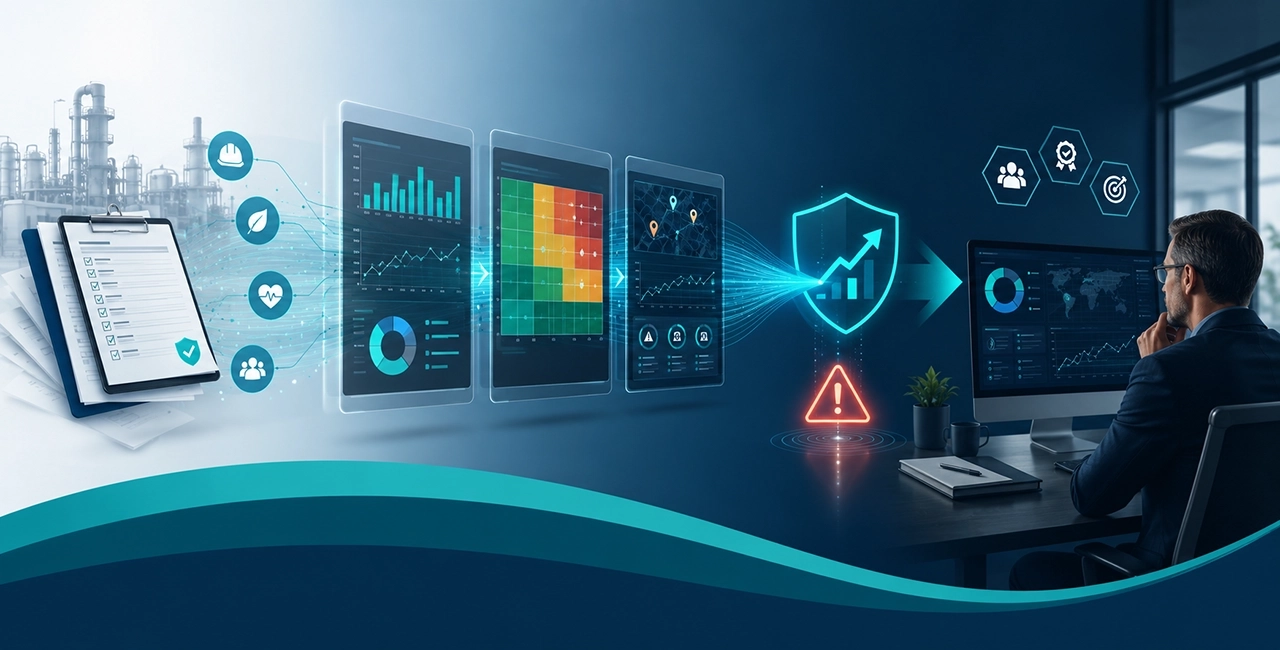
6) How Data-Driven QHSE Creates Warnings In a data-driven approach:
- Data is integrated
- Indicators become trend-based, not point-based
- Thresholds are defined
- Deviations are highlighted Instead of reporting “what happened,” the system asks: “What is forming?”
7) Why Some Organizations Ignore Warnings Common reasons include:
- Habitual post-incident reaction
- Distrust of non-deterministic data
- Time pressure and operational priorities
- Lack of a preventive decision culture Yet professional management controls risk before a crisis, not after it.
8) Decision-Focused Summary Data-driven QHSE reaches maturity when it becomes an early warning system.
Organizations that take warnings seriously:
- Are less likely to be surprised
- Make decisions earlier
- Control costs before they escalate And it is precisely at this point that data-driven QHSE evolves from a recorder of past incidents into a guardian of the organization’s future.