


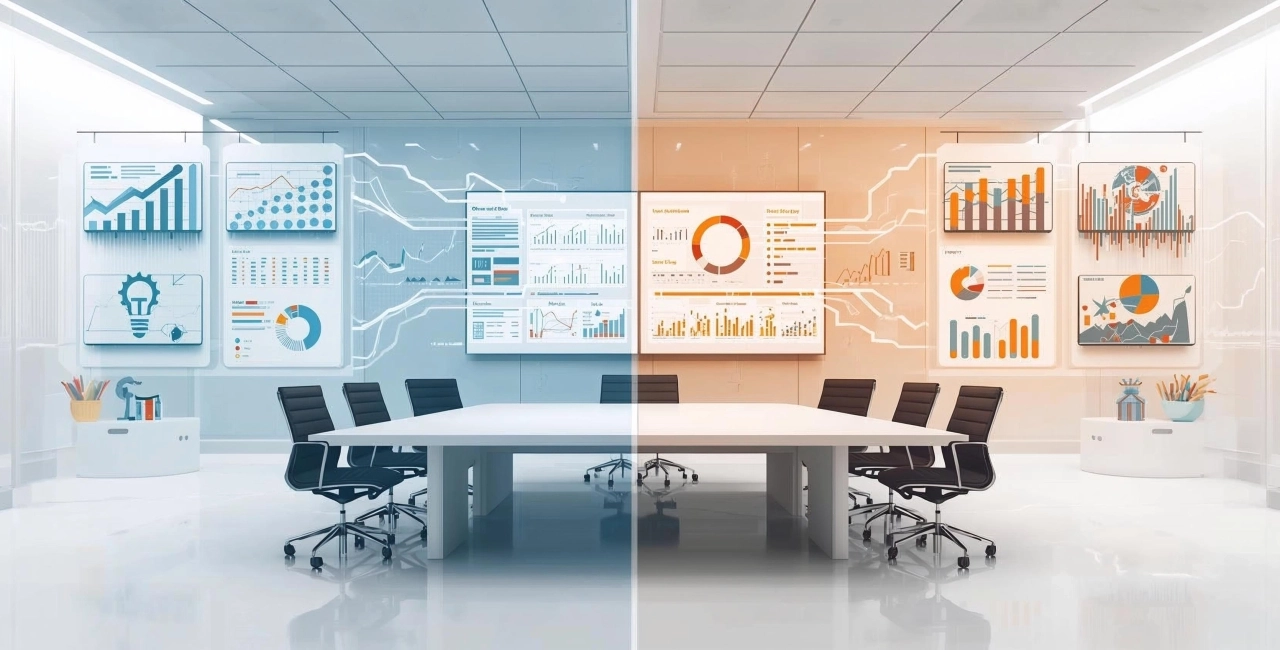
Many organizations produce extensive QHSE reports, yet safety decisions remain delayed and reactive. Report-driven approaches inform the past, not the future. Managerial dashboards create value only when data turns into insight, comparison, and actionable decisions
1) The Real Problem
In many organizations, the QHSE function is highly active: incident reports are written, monthly statistics are issued, annual charts are prepared, and audits are answered.
Yet a persistent contradiction remains: despite all these reports, safety decisions are still late, reactive, and costly. Managers have reports—but when it is time to decide, they still ask:
“So what’s your conclusion?”
2) The Common Organizational Mistake
The most common mistake is confusing reporting with insight.
Report-driven QHSE typically means:
- Focusing on the past
- Presenting numbers without context
- Describing events instead of analyzing trends
- Producing files instead of answers
In this model, QHSE becomes a report factory, not a decision engine.
3) Why Reports Are Not Inherently Decision-Enabling
Reports are usually designed for three purposes:
- Documentation
- Accountability
- Compliance
Decision-making, however, requires something else:
- Comparison
- Prioritization
- Prediction
- Choice
Reports tell us what happened. Management wants to know what should be done next. That gap is exactly where decisions lose strength.
4) Redefining the Role of the Management Dashboard
A management dashboard is not a digital version of a report. A good dashboard asks questions.
In a decision-oriented dashboard:
- Numbers are not isolated; they have context
- Colors are not decorative; they signal risk
- Charts are not for aesthetics; they enable comparison
- Filters are not toys; they are decision tools
A management dashboard means: one screen, a few critical questions, and a clear decision path.
5) The Management Translation (So What?)
From senior management’s perspective, the difference is clear:
- Report: “We had three incidents this month.”
- Dashboard: “If this trend continues, this unit will become high-risk next month.”
- Report: “80% of training has been completed.”
- Dashboard: “The remaining 20% belongs to the group with the highest incident rate.”
Reports inform managers. Dashboards enable decisions.
6) Why Many Dashboards Also Fail
Because they are built with reporting logic, not decision logic.
Unsuccessful dashboards usually:
- Show everything
- Highlight nothing
- Have KPIs but no questions
- Look good but change nothing
A decision-oriented dashboard starts with less, not more.
7) The Role of Dashboards in Data-Driven QHSE
In a data-driven approach, dashboards:
- Are not the end of the process, but the middle of the chain
- Are not display tools, but conversation tools
- Are outputs of analysis, not substitutes for it
A good dashboard helps:
- Shorten management meetings
- Clarify discussions
- Make decisions traceable
And most importantly, it allows QHSE to speak the language of management.
8) Decision-Focused Summary
Report-driven QHSE does not fail because it is wrong; it fails because it is not designed for decision-making.
A successful management dashboard:
- Does not eliminate reports
- It elevates them to the decision level
An organization that moves from reports to decision-oriented dashboards:
- Steps away from describing the past
- Moves closer to managing the future
And this is precisely where QHSE evolves from a reporting unit into a managerial decision-making arm.